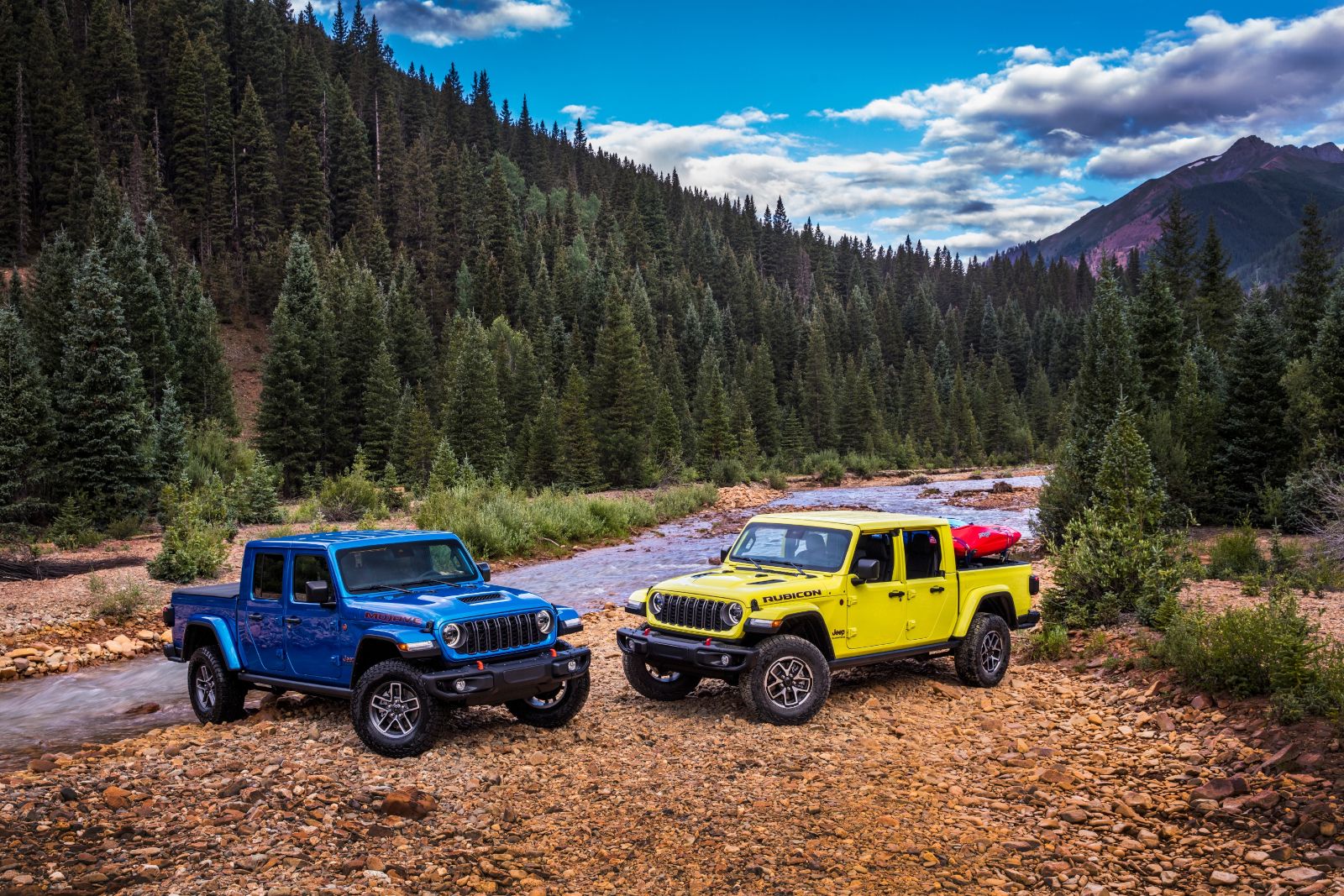
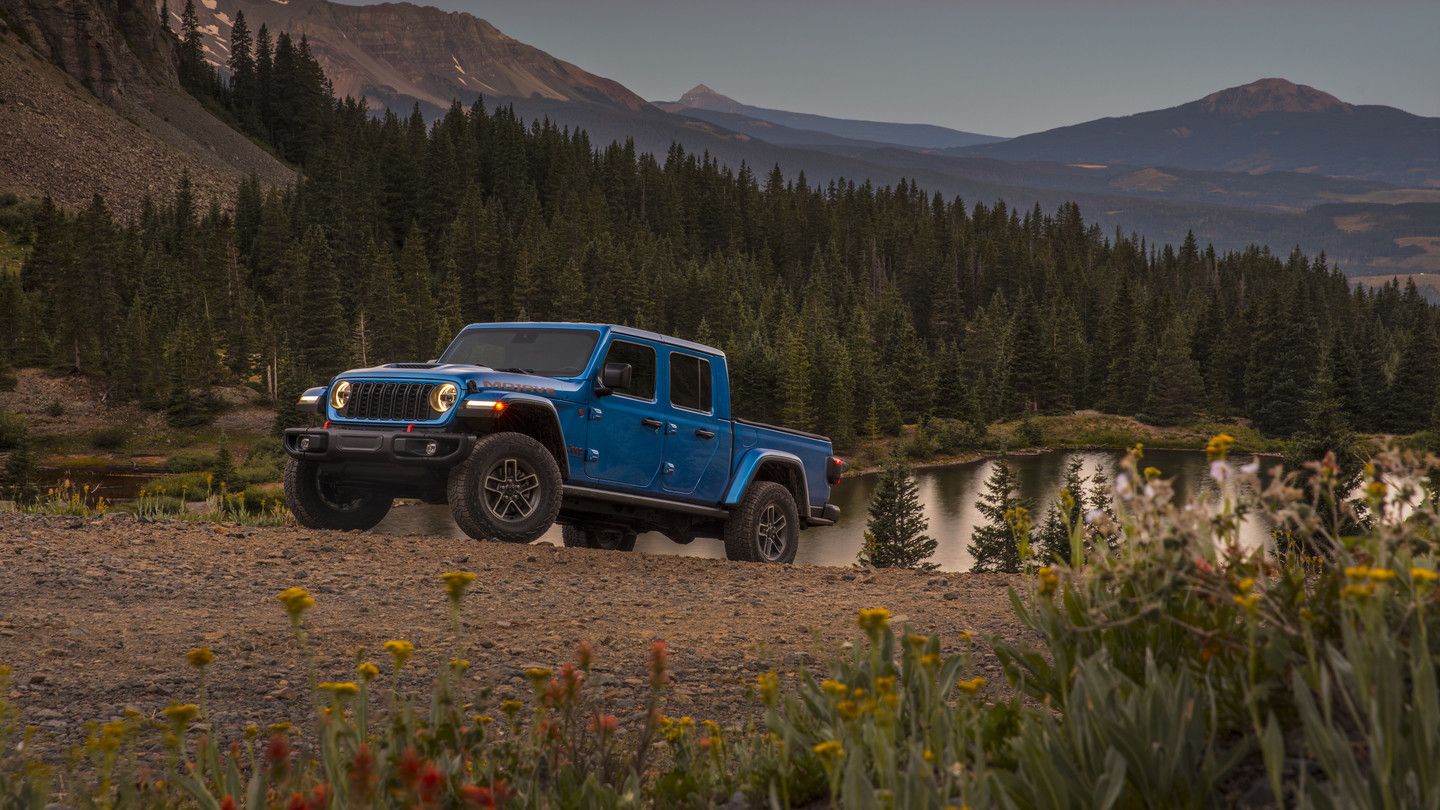
Northern Ontario drivers considering the 2025 Jeep Gladiator face a clear choice between two Trail Rated and Desert Rated models engineered for distinct terrain types. The Rubicon excels at technical rock crawling and low-speed obstacle navigation, while the Mojave specializes in high-speed desert-style terrain with performance-tuned suspension. Both models share the proven 3.6-litre Pentastar V-6 engine rated at 285 horsepower and 260 lb-ft of torque, along with up to 3,492 kg towing capability—but their specialized systems create different strengths for Sundridge-area drivers who tackle logging roads, seasonal cottage trails, or need a versatile work truck.
Understanding these differences helps match your Gladiator to the terrain you actually drive. For drivers in the Muskoka region who navigate rocky trails, steep cottage access roads, and technical off-road situations at lower speeds, the Rubicon's low-range gearing and locking differentials provide superior traction. For those who cover long stretches of gravel logging roads at higher speeds or prefer a smoother highway ride, the Mojave's suspension tuning delivers better control.
Rubicon: Low-Speed Technical Capability
Rock-Trac 4x4 System with 4:1 Low Range
The Gladiator Rubicon features the Rock-Trac part-time transfer case with a 4:1 low-range gear ratio—double the 2.72:1 ratio found in the Mojave's Command-Trac system. This difference proves critical when navigating steep rocky inclines, deep mud, or situations where precise throttle control at crawling speeds determines success.
When approaching a technical obstacle like a boulder-strewn trail or a steep boat launch with poor traction, the Rubicon's 4:1 low range allows the engine to operate at higher RPM while the vehicle moves slowly. This provides more engine braking on descents and finer control on climbs. The lower gearing reduces strain on the drivetrain and prevents wheel spin in situations where maintaining momentum matters less than maintaining traction.
Tru-Lok Front and Rear Axle Lockers
The Rubicon includes electronic locking differentials at both the front and rear axles. When engaged, these Tru-Lok differentials force both wheels on an axle to rotate at the same speed, regardless of traction conditions. This capability proves essential when one wheel lifts off the ground or loses grip on ice, mud, or loose rock.
Consider a scenario common to northern Ontario: navigating a rutted cottage access road in spring when frost heave creates uneven terrain. With open differentials, power flows to the wheel with the least resistance—often the one in the air or on ice. With locked differentials, power continues to reach wheels with traction, allowing forward progress where standard 4x4 systems would leave you stuck.
The Rubicon's electronic front sway-bar disconnect further enhances articulation by allowing the front wheels to move independently over obstacles. This feature increases wheel travel, helping maintain tire contact with the ground on severely uneven terrain.
Dana 44 Heavy-Duty Axles with 4.10 Ratio
The Rubicon's Dana 44 solid front and rear axles with 4.10 axle ratio provide the strength needed for serious off-road use while optimizing torque delivery at lower speeds. These heavy-duty axles handle the stress of rock crawling, steep inclines, and the lateral forces generated when navigating side slopes on trails.
The 4.10 axle ratio works with the 4:1 transfer case to create a 16.4:1 crawl ratio—the lowest in the Gladiator lineup. This allows the Rubicon to climb obstacles that would stall higher-geared vehicles or require excessive momentum that damages terrain and vehicle components.
Rubicon Off-Road Systems
|
Feature
|
Specification
|
Purpose
|
|
Transfer Case
|
Rock-Trac with 4:1 low range
|
Maximum torque multiplication for obstacles
|
|
Axle Lockers
|
Tru-Lok front and rear
|
Force power to wheels with traction
|
|
Axle Type
|
Dana 44 heavy-duty with 4.10 ratio
|
Strength for technical terrain
|
|
Sway Bar
|
Electronic front disconnect
|
Increased wheel articulation
|
|
Ground Clearance
|
281 mm (11.1 inches)
|
Obstacle clearance
|
|
Approach Angle
|
43.4 degrees
|
Steep incline capability
|
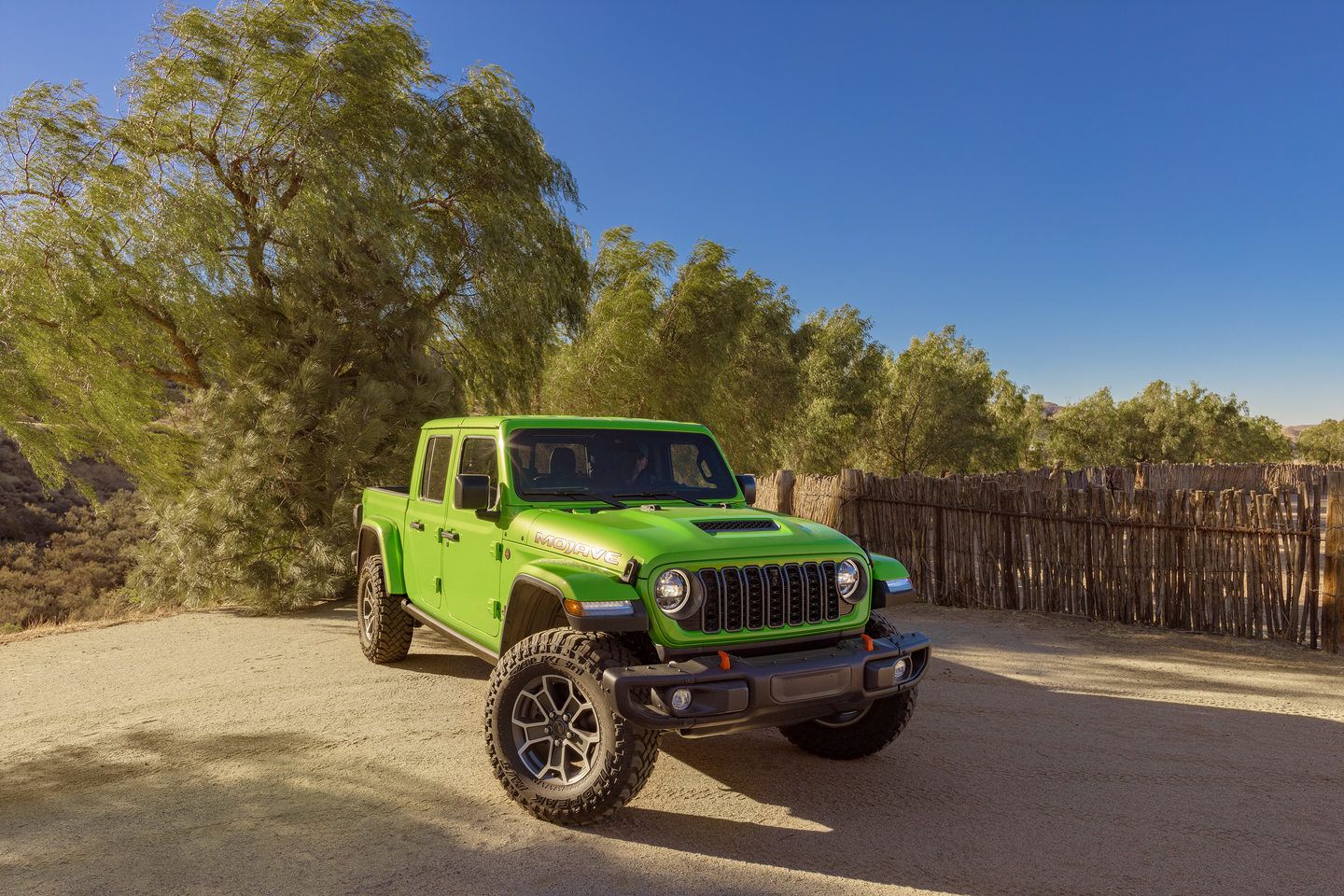
Mojave: High-Speed Desert Performance
FOX 2.5-Inch Internal Bypass Shocks
The Gladiator Mojave features specially tuned FOX 2.5-inch internal bypass shocks with external reservoirs—suspension components typically found on purpose-built off-road racing vehicles. These shocks use internal bypass technology that provides different damping characteristics at different points in the suspension travel.
At the beginning of the stroke, the shocks allow relatively soft compression for small bumps and everyday driving comfort. As the suspension compresses further—such as when landing after catching air on a washboard gravel road or hitting a larger obstacle at speed—the bypass zones progressively firm up the damping to control the impact and prevent bottoming out.
The external reservoirs increase oil capacity, which helps maintain consistent performance during extended high-speed runs on rough roads. For northern Ontario drivers who regularly cover long stretches of logging roads or forest access routes at highway speeds, this suspension tuning absorbs impacts that would feel harsh in other trucks while maintaining stability.
FOX Front Hydro Jounce Bumpers
Working with the FOX shocks, the Mojave includes hydro jounce bumpers at the front suspension. Unlike traditional rubber bump stops that simply prevent metal-to-metal contact at full compression, hydro jounce bumpers use hydraulic damping to progressively cushion impacts as the suspension reaches its travel limit.
This system proves valuable when driving over rolling terrain at speed—situations where the suspension repeatedly compresses fully. The hydro jounce bumpers prevent the harsh impact feel of hitting traditional bump stops, instead providing a controlled deceleration that maintains vehicle composure and reduces stress on chassis components.
One-Inch Front Suspension Lift and Desert Tuning
The Mojave features a one-inch front suspension lift that increases ground clearance to 294 mm (11.6 inches)—the highest in the Gladiator lineup. This additional clearance, combined with the FOX suspension components, creates a truck optimized for covering rough terrain quickly rather than crawling over obstacles slowly.
The Mojave's Command-Trac transfer case with 2.72:1 low range provides adequate torque multiplication for most northern Ontario off-road situations while maintaining better highway fuel economy and quieter operation than the Rubicon's 4:1 system. For drivers whose off-road travel consists primarily of maintained gravel roads, forest access routes, and seasonal cottage roads rather than technical rock crawling, this gearing balance proves more practical.
The Mojave includes a Tru-Lok rear-axle locker (but not a front locker) along with Dana 44 axles with 4.10 ratio. The rear locker handles most traction situations encountered on logging roads and trails, while the absence of a front locker reduces complexity and weight.
Mojave High-Speed Systems
|
Feature
|
Specification
|
Purpose
|
|
Shocks
|
FOX 2.5-inch internal bypass with reservoirs
|
High-speed impact control
|
|
Jounce Bumpers
|
FOX front hydro jounce
|
Progressive compression damping
|
|
Transfer Case
|
Command-Trac with 2.72:1 low range
|
Balanced on/off-road gearing
|
|
Axle Locker
|
Tru-Lok rear only
|
Traction for most situations
|
|
Ground Clearance
|
294 mm (11.6 inches)
|
Maximum obstacle clearance
|
|
Suspension Lift
|
1-inch front
|
Enhanced high-speed stability
|
Shared Capabilities: Power, Towing, and Versatility
Both the Rubicon and Mojave share the 3.6-litre Pentastar V-6 engine that delivers 285 horsepower at 6,400 rpm and 260 lb-ft of torque at 4,000 rpm. This proven engine provides reliable power across northern Ontario's temperature extremes, from summer heat to winter cold below -30°C.
The eight-speed automatic transmission works with the V-6 to optimize fuel economy during highway cruising while providing the gear range needed for both towing and off-road situations. The transmission includes a tow/haul mode that adjusts shift points and throttle response when pulling trailers.
Towing Capability: Up to 3,492 kg
Both models deliver maximum towing capacity of up to 3,492 kg (7,700 lb) when properly equipped with the Max Trailer Tow Package and 4.10 axle ratio. This capacity handles large enclosed trailers, boat trailers, toy haulers, and equipment trailers common to work and recreational use in the Muskoka region.
The Gladiator's body-on-frame construction and five-link suspension system provide the structural integrity needed for regular towing. The 1,531 mm (60.3-inch) cargo box with tailgate closed—expanding to 2,065 mm (81.3 inches) with tailgate open—accommodates building materials, ATV loading, or gear for extended cottage stays.
Payload Capacity and Bed Utility
The Rubicon offers up to 498 kg (1,100 lb) payload capacity, while the Mojave provides up to 476 kg (1,050 lb). Both figures support typical use cases: loading building supplies, transporting ATVs or snowmobiles, hauling firewood, or carrying camping gear for extended trips.
The steel cargo box features four cross-members that reinforce the load floor, integrated tie-down points, and under-rail LED lighting. The damped three-position tailgate can be set fully open, open with cables supporting it at an angle for longer cargo, or fully closed.
Towing and Payload Comparison
|
Model
|
Max Towing (properly equipped)
|
Max Payload
|
Cargo Box Volume
|
|
Rubicon
|
3,492 kg (7,700 lb)
|
498 kg (1,100 lb)
|
1,005 L (35.5 cu ft)
|
|
Mojave
|
3,492 kg (7,700 lb)
|
476 kg (1,050 lb)
|
1,005 L (35.5 cu ft)
|
Making the Choice: Terrain and Use Cases
Choose the Rubicon If:
Your driving includes technical off-road obstacles. If you regularly navigate rocky trails, steep cottage access roads with large boulders, or situations where you need to crawl over obstacles at walking speed, the Rubicon's 4:1 low range and front/rear lockers provide the control and traction required.
You need maximum articulation and clearance for slow-speed trails. The Rubicon's electronic sway-bar disconnect and locking differentials excel in situations where maintaining tire contact with uneven terrain determines whether you make it through or get stuck.
Your off-road travel prioritizes technical capability over speed. For drivers who value being able to handle the most challenging trails in the region—even if those trails are traversed slowly—the Rubicon's specialized systems justify their additional complexity.
You want the most recognized off-road capability. The Rubicon badge carries Trail Rated certification that specifically validates performance on the most demanding terrain, providing confidence for situations where getting stuck means serious inconvenience.
Choose the Mojave If:
Your off-road driving covers long distances on gravel roads. If you regularly travel forest service roads, logging routes, or maintained gravel roads at highway speeds, the Mojave's FOX suspension delivers better ride quality and control than the Rubicon's rock-crawling setup.
You prefer a smoother highway ride. The Mojave's suspension tuning provides better everyday comfort on paved roads compared to the Rubicon's more aggressive setup, making it a better choice if your truck spends significant time on highways between off-road destinations.
Most of your off-road situations don't require extreme low-speed crawling. The Mojave's 2.72:1 low range and rear-only locker handle the majority of northern Ontario trail situations—mud, snow, moderate inclines, and loose surfaces—without the complexity of the Rubicon's multiple lockers and ultra-low gearing.
You value high-speed stability over maximum obstacle capability. For drivers whose definition of off-road means covering rough terrain efficiently rather than conquering the most technical obstacles, the Mojave's Desert Rated badge validates performance where speed and stability matter more than crawl ratios.
Additional Considerations for Northern Ontario
Winter Performance
Both models handle northern Ontario winters with the same fundamental 4x4 capability. The Rubicon's lower gearing provides an advantage on steep, icy cottage driveways where precise throttle control prevents wheel spin. The Mojave's suspension tuning better absorbs impacts from hitting ice ruts and frozen potholes at speed on winter highways.
Fuel Economy
The Mojave's 2.72:1 low-range gearing allows the engine to operate at lower RPM during highway cruising, potentially delivering slightly better fuel economy during long-distance driving. The Rubicon's 4:1 gearing optimizes for torque multiplication rather than highway efficiency.
Maintenance and Complexity
The Rubicon's additional systems—front axle locker, sway-bar disconnect, and more aggressive low-range gearing—introduce more components that require maintenance. The Mojave's simpler system with only a rear locker reduces potential maintenance points while still handling most off-road situations northern Ontario drivers encounter.
Resale Value and Recognition
Both models hold strong resale value, but the Rubicon badge carries broader recognition among off-road enthusiasts. The Mojave appeals to a more specific audience that values high-speed performance, which may affect resale depending on your local market.
Experience Both Models at Mac Lang Sundridge
The choice between the 2025 Gladiator Rubicon and Mojave depends on matching specialized systems to your actual driving conditions. The Rubicon delivers maximum capability for technical rock crawling and low-speed obstacles with its Rock-Trac 4x4 system, Dana 44 heavy-duty axles, and 4:1 low range. The Mojave excels at high-speed desert-style terrain with FOX 2.5-inch internal bypass shocks and hydro jounce bumpers. Both provide 285 hp, 260 lb-ft of torque, and up to 3,492 kg towing capability for northern Ontario's varied demands.
Visit Mac Lang Sundridge in Sundridge to compare these models directly. Our team understands the specific terrain challenges across the Muskoka region and can help match your Gladiator choice to your typical use cases—whether that's navigating logging roads for work, accessing remote cottage properties, or tackling technical trails for recreation.